
Eligibility
Can I Build an ADU on My Property? (California Eligibility)
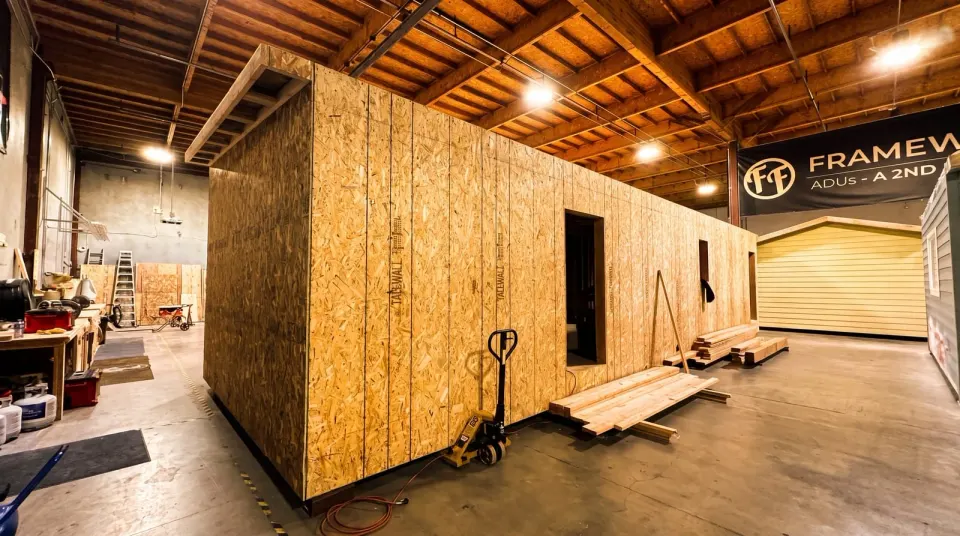
If you own a single-family or multifamily home in California, you can almost certainly build an ADU. State law (Government Code §65852.2) makes ADUs allowed by right on virtually all residential lots, and it overrides most local rules that used to get in the way, minimum lot sizes, owner-occupancy requirements, and excessive setbacks. The real question usually isn’t whether you can build, but which size fits your lot.
Here’s a quick self-check, followed by the few situations that actually need a closer look.
The short version: Most California single-family lots qualify for an ADU by right. The common blockers aren’t zoning, they’re physical: crane access, sewer/utility capacity, and a true HOA restriction. A feasibility study settles it for your address.
Quick eligibility checklist
You’re very likely eligible if:
- ✅ Your property has (or is zoned for) a single-family or multifamily home
- ✅ You can fit a detached structure with 4-foot side and rear setbacks
- ✅ There’s room for a home up to 1,200 sq ft (smaller models need far less)
- ✅ A crane and delivery truck can reach the build location
- ✅ Water, sewer, and electrical service can support another unit (often they can with minor upgrades)
You do not need: a large lot, to live on the property, or to add parking if you’re within a half-mile of transit.
What California law guarantees
State ADU law sets minimums your city can’t override:
| Rule | What it means for you |
|---|---|
| Up to 1,200 sq ft detached | Every Framework First model fits |
| 4-ft side/rear setbacks | No oversized buffer demands |
| Ministerial approval | No discretionary hearing or neighbor sign-off |
| 60-day review | The city must act on a complete application in 60 days |
| Transit parking exemption | No added parking within ½ mile of transit |
This is why a straightforward detached ADU is usually a by-right project, not a negotiation. (More on this in our permit timeline guide.)
The situations that need a real look
We’ll be honest about the exceptions:
- Crane access. Extremely tight lots or certain hillside conditions can make delivery hard. We check this during the site visit.
- Utility capacity. A new sewer lateral or upgraded electrical service may be needed, common and solvable, but worth pricing.
- HOA / deed restrictions. California has limited what HOAs can block, but specific CC&Rs still matter. We review them in the feasibility study.
- Coastal or historic overlays. Some special districts add steps.
The definitive answer for your lot
The fastest way to know for certain is a feasibility study: we pull your property records, confirm setbacks and buildable area, check utilities and any HOA, and tell you exactly what you can build, with a full refund if it turns out your lot can’t host one. Or start with a free 30-minute property analysis and our team will give you a quick read.
Frequently asked questions
What is the smallest ADU California guarantees I can build?
State law guarantees nearly every single-family lot at least an 800 square foot, 16 foot tall ADU with 4 foot side and rear setbacks, no matter what local standards say. Cities cannot zone that entitlement away.
What most often disqualifies a property?
Rarely the rules; usually the practical stuff: tight crane access, utility capacity, or restrictive CC&Rs. The feasibility study checks all three, and the fee is refundable if it turns out your property cannot host an ADU.
Do my neighbors get a say?
No. ADU approval is ministerial: the city reviews objective standards and must decide within 60 days of a complete application, with no public hearing and no neighbor sign-off.
Curious in two minutes? See if your property qualifies, we’ll tell you straight, even if the answer is “not this lot.”