
Appraisal & Resale
ADU Appraisal and Resale Value in California: What Your ADU Adds to Your Home
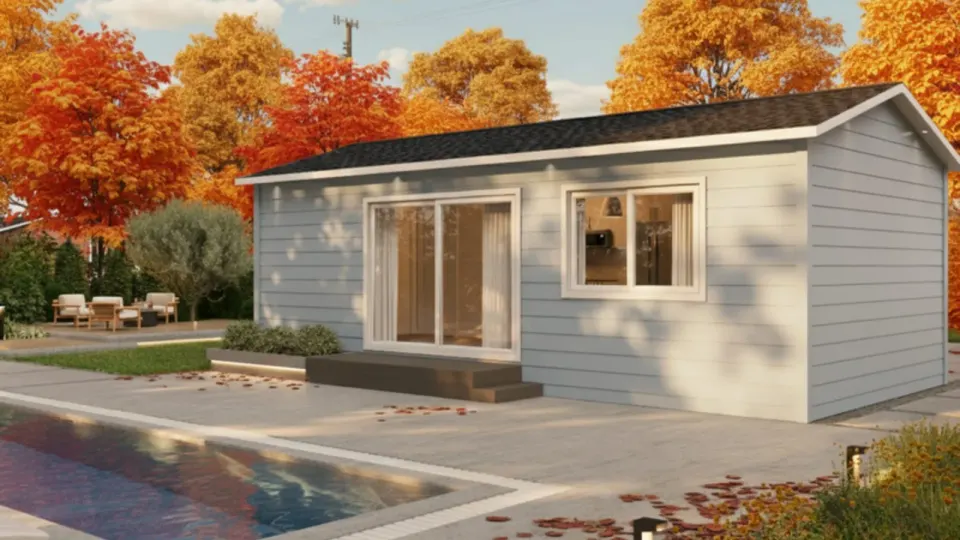
A well-built California ADU typically adds 95% to 125% of its construction cost to your property’s appraised value, according to recent CA real estate market data. A $309,000 Framework First Six Sixty 1-Bedroom on a Bay Area property typically appraises at $320,000 to $385,000 of added value, meaning the ADU recovers (and often exceeds) its build cost as soon as it’s complete.
This is dramatically different from a home addition, which typically recovers only 70 to 80% of its cost at appraisal, and from most home improvements (kitchen remodel, bathroom remodel, deck), which fall into similar 60 to 80% recovery ranges. The reason ADUs appraise so well is that they’re treated as separate dwellings, appraised by rental income method (if rentable) or comparable-sale method (against other ADU sales in the area), not just by replacement cost.
The short version: Average CA ADU appraisal premium: 95 to 125% of build cost. Bay Area top end: 130 to 140%. Build cost recovers immediately; rental income is on top. AB-1033 (condo-ize-and-sell) status of your city dramatically affects long-term resale.
How appraisers actually value ADUs
There are three methods California appraisers use for ADUs, and the choice depends on the property and market:
1. The income approach
For ADUs that can be rented (which is most ADUs in California post-2020 reforms), appraisers compute:
- Gross Rental Multiplier (GRM) of similar rental properties in the area
- Projected market rent for your ADU size, location, and quality
- Multiply rent × GRM to get the income-method value
Example: A 660 sq ft 2BR ADU in San Jose, projected market rent $2,800/mo = $33,600/yr. San Jose GRM in 2026 is roughly 13 to 15. Income-method value: $436,800 to $504,000. Build cost: $339K. That’s a 129 to 149% premium, even higher than the typical range.
The income method is dominant in California’s expensive markets (Bay Area, coastal) because rent levels make the income math compelling.
2. The sales comparison approach
For properties where rental income isn’t the primary use case (multi-generational family, primary-residence ADU), appraisers compare to similar properties with ADUs that recently sold in the area:
- Find 3+ comparable sales of properties with ADUs within ~1 mile and ~6 months
- Adjust for differences in lot size, ADU size, primary home quality, etc.
- The “value with ADU” minus “value without ADU” = the ADU’s contributed value
This method is used more in suburban/exurban markets (Salinas, Atascadero, parts of Watsonville) where rentals are less dominant. Recovery ranges are usually 95 to 110% in these markets.
3. The cost approach (less common)
For very recent new construction, appraisers sometimes compute the depreciated cost of building the ADU. This rarely shows up as the primary method but is used as a sanity check. For our clients, the cost approach is the floor, your real appraisal almost always exceeds it.
What boosts your ADU’s appraised value
Factors that consistently increase appraisal:
- Higher-quality finishes. Quartz countertops, real wood cabinets, premium appliances, hardwood-look flooring. Appraisers note these in their reports and adjust comparable values up.
- Two-bedroom configurations over studios. 2BR units rent for ~$400 to $800/mo more than 1BR units in California, and appraisers reflect that. Our Six Sixty 2BR at $339K typically appraises higher than the Six Sixty 1BR at $309K, relative to cost.
- L-shaped or U-shaped layouts on larger lots. These often appraise higher than rectangular layouts because they fit certain lot shapes better and offer more outdoor connectivity.
- Modern (Ultra Modern) or Farmhouse style in higher-end neighborhoods. Style matters in appraisal. A Classic Craftsman ADU in Pacific Grove? Excellent. An Ultra Modern in the same Pacific Grove? Often appraises higher. In Salinas? Reverse, Classic Craftsman appraises better. Match style to neighborhood. See our styles guide for fit.
- Separate utilities (water + electrical meters). Required for rental separability in some markets. Appraisers value the optionality.
- Private entrance and outdoor space. A small patio or covered entry adds meaningful value vs an ADU that shares the main-house yard.
- Permitted, fully legal status. Sounds obvious but matters, unpermitted ADUs (or “bootleg” garage conversions) often hurt appraisal even when they’re rentable. All Framework First builds are permitted and fully inspected.
What hurts your ADU’s appraised value
- Unpermitted construction. Worst case: an unpermitted ADU can actively hurt your property value because buyers worry about future legal issues. Don’t build unpermitted.
- Visible from the main house in awkward ways. Privacy matters, appraisers note when an ADU is positioned in a way that makes the main house feel cramped.
- Tight lot configuration. If the ADU significantly reduces usable backyard space, that can hurt the overall property value even though the ADU itself has value.
- Cheap finishes or DIY work. Bargain-bin fixtures, particle-board cabinets, plastic-look flooring. Visible to appraisers; valued accordingly.
- Mismatched style with the main house and neighborhood. Ultra-modern ADU in a 1920s Craftsman neighborhood, neighbors complain, buyers question, appraisers reflect that.
How rental income affects resale value
When you sell a property with an ADU that has rental history, buyers can use the rental income to qualify for a larger mortgage. Many lenders count 75% of established rental income toward the buyer’s debt-to-income calculation. This makes properties with rented ADUs more financeable for buyers, which means more potential buyers, which generally means higher sale prices.
Rental history matters. A property with 2 years of consistent $2,800/mo rental documentation appraises better than one with the same ADU but no rental history. If you’re planning to sell within 5 years, rent the ADU for at least 12 months before listing.
AB-1033 condo-ize-and-sell value
California’s AB-1033 (effective 2024) lets some ADUs be converted to condominiums and sold separately from the main house in cities that have adopted the local ordinance. This dramatically changes ADU resale economics:
- Without AB-1033: ADU is part of the property; total value reflects both buildings as one unit.
- With AB-1033: ADU can potentially be sold separately as a condo. Each unit has its own deed, its own financing, its own appraisal.
Implication for resale value: In cities that have adopted AB-1033 (San Jose, growing list), having a “condo-izable” ADU adds optionality value. The same property can be sold whole OR the ADU sold separately and the main house sold separately, whichever yields more.
AB-1033 status by service-area city (as of 2026):
- Adopted: San Jose
- Under consideration: Santa Cruz, Los Gatos, Los Altos
- Not yet adopted: Salinas, Marina, Pacific Grove, Aptos, Capitola
- Coastal complications: Carmel (Coastal Commission overlay limits applicability)
We track this for all clients in our feasibility study. For the full picture of how separate-sale rights work, including the condo plan, lender consent, and city opt-in, read our guide on selling an ADU separately in California.
The cost-vs-value math, with real numbers
Comparing different home-improvement projects for cost recovery in California (2026 averages):
| Project | Typical cost | Value added | Recovery % |
|---|---|---|---|
| Framework First ADU (660 sq ft 1BR) | $309,000 | $320K to $385K | 104% to 125% |
| Framework First ADU (945 sq ft 2BR) | $449,000 | $435K to $565K | 97% to 126% |
| Major kitchen remodel | $80K to $130K | $50K to $95K | 60 to 75% |
| Master bedroom suite addition | $250K to $350K | $175K to $260K | 70 to 80% |
| Bathroom remodel | $25K to $45K | $15K to $32K | 60 to 70% |
| Backyard deck + landscaping | $30K to $60K | $20K to $45K | 65 to 75% |
| In-ground pool (Bay Area) | $80K to $200K | $50K to $100K | 50 to 60% |
ADUs are the standout. They’re the rare California home improvement where you recover (and often exceed) your investment immediately at sale, while also generating rental income or housing family members in the years before sale.
The bottom line
A well-built California ADU is one of the only home improvements where the math works in your favor on day one. The construction cost is recovered (often with a premium) at appraisal, the rental income is gravy on top, and properties with permitted, well-finished ADUs sell faster than otherwise-equivalent single-family properties.
The factors that maximize appraisal value are within your control: pick a model that fits your lot well, pick a style that matches your neighborhood, use a permitted, fully-inspected builder, and (if rental is the goal) rent the unit for at least 12 months before any future sale.
For a fully-inclusive ADU build from a CSLB-licensed family company, that’s us. Start with a free property analysis and we’ll tell you straight which model + style will appraise best on your specific lot.
Want to see the property-value math for a specific model? Run the ROI calculator, it shows the property value added and 15-year equity scenario for any model + your home’s current value.