
ADU Questions · 2026
ADU vs Moving: Which Is Cheaper?
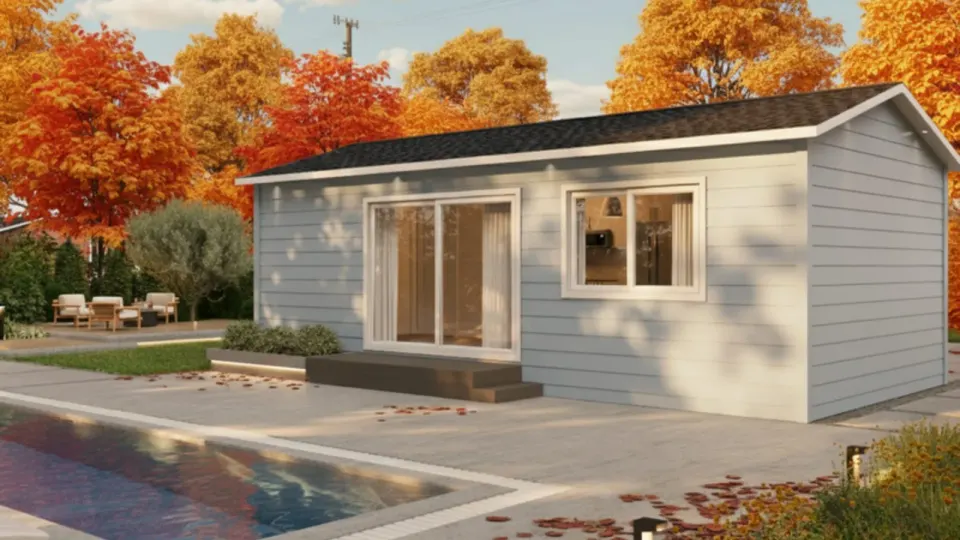
Building an ADU is cheaper than moving for most families once you count everything moving actually costs: realtor commissions, closing costs, a new mortgage at whatever rate is available today, and the cost of walking away from a home, neighborhood, and school district you’ve already invested years in. Framework First’s all-inclusive ADU pricing, with a permitting budget built into every price, runs $199,000 to $599,000, and for a lot of families that number lands well below the true cost of selling their current home and buying a comparable one nearby. There is no universal answer here. It depends on your local real estate market and your family’s specific situation, but the categories below are the honest, full picture on both sides.
The short version: Moving means paying to sell, paying to buy, and starting over somewhere new. Building an ADU means staying put, adding space on land you already own, and keeping the home, block, and school district your family already has. For most families the ADU math wins, but run your own numbers before deciding.
What moving actually costs
Selling and buying a new home isn’t just the price difference between the two houses. It’s a stack of costs that show up whether or not you notice them coming:
- Realtor commissions. Selling a home involves paying commission to agents, typically split between the listing agent and the buyer’s agent. This is a real percentage of your sale price, not a flat fee, so it scales with home value. Exact rates are negotiable and vary by agent and market, so get a specific number from a local agent rather than assuming a figure.
- Closing costs on both ends. Selling involves its own closing costs (title, escrow, transfer taxes, prorated property taxes). Buying involves its own set again (loan origination, appraisal, inspection, title insurance). You pay both.
- A new mortgage, usually at a different rate. If you currently hold a mortgage from a few years ago, there’s a real chance your existing rate is lower than what’s available on a new purchase loan today. A lender can confirm your actual rate and what that difference means for your monthly payment over the life of a new loan.
- The move itself. Movers, temporary housing if the timing doesn’t line up, new furniture or repairs for the new place, and the general cost of physically relocating a household.
- Disruption that doesn’t show up on a settlement statement. Kids changing schools mid-year. Leaving neighbors and a community you know. Losing proximity to work, family, or routines you’ve built. None of this has a dollar figure, but it’s real, and it’s often the cost families underweight until they’re living it.
What building an ADU actually costs
An ADU with Framework First is priced differently: one number, locked at contract, that includes a permitting budget along with plans, foundation, the factory build, delivery, utility hookups, appliances, and final inspection. Across our 14 models, that range is $199,000 to $599,000 depending on size (405 to 1,200 sq ft), and because exact permit costs are set by your city or county, they get confirmed for your address in the feasibility study. There’s no separate line item for realtor fees, no second mortgage at a new rate unless you choose to finance, and no moving truck.
What you’re buying with an ADU is space, not a new house. You keep your current mortgage (and whatever rate came with it), you keep your neighborhood and school district, and you add a permitted, code-compliant second dwelling on the property you already own. See our full cost breakdown by model for how the range breaks down size by size.
The real question: what are you solving for
Moving and building an ADU solve different underlying problems, and the cheaper option depends on which one actually matches your situation:
| If your real problem is… | The cheaper path is usually… |
|---|---|
| You need more space but like your location | ADU, keep the home, add the space |
| You want to house aging parents or adult children nearby | ADU, everyone stays close without sharing walls |
| You want rental income without buying a second property | ADU, no new mortgage, no landlord-from-a-distance logistics |
| Your job, school district, or entire life has relocated | Moving, an ADU doesn’t solve a geography problem |
| You want a fundamentally different home (different layout, different city) | Moving, an ADU adds to what you have, it doesn’t replace it |
If your family’s actual need is more room, not a different zip code, an ADU tends to win on cost because it skips the entire moving-cost category above. If your need is genuinely about location, an ADU can’t fix that and moving is the honest answer regardless of price.
It’s also worth remembering an ADU can add resale value to your existing property rather than just costing money. Our guide on ADU appraisal and resale value covers how that typically works.
Where Framework First fits
If the math points toward staying and building, Framework First’s all-inclusive pricing makes the comparison easier to run honestly, because there’s one locked number instead of a moving target of contractor allowances. Our 14 models range from 405 to 1,200 sq ft, roughly 97% built in our Salinas factory and crane-delivered to your property, with typical delivery in 4 to 9 months depending on model size. If you’re weighing cash against a loan for the ADU side of this comparison, our guide on paying cash vs financing an ADU is a good next read.
The most useful next step either way is getting real numbers instead of estimates. A feasibility study tells you what will actually fit on your specific lot and what it will cost, which turns this whole comparison from a guess into a decision.
Frequently asked questions
Is it always cheaper to build an ADU than to move?
No. It’s cheaper for most families most of the time because moving carries commission, closing, and often a higher-rate costs that an ADU skips entirely. But if your real need is a different city, a different school district, or a fundamentally different home, an ADU doesn’t solve that problem no matter the price, and moving is the right answer regardless of cost comparison.
Does building an ADU affect my property taxes the way selling and buying would?
Yes, but differently. Adding an ADU generally triggers a reassessment of only the ADU’s added value, while your existing home keeps its current Prop 13 base under California law. Buying a new home resets your property tax base to the new purchase price entirely. See our ADU property tax guide for the specifics.
What if I can’t decide between the two?
Start with a feasibility study. It tells you concretely what can be built on your lot, what it would cost, and how long it would take, which gives you a real number to compare against actual home prices in your target area instead of guessing on both sides.
Can I keep my current mortgage rate if I build an ADU instead of moving?
Yes, that’s one of the biggest cost advantages. Building an ADU doesn’t require refinancing your existing mortgage unless you choose to use a cash-out refinance or home equity product to pay for it. A lender can walk you through financing options and confirm how each one affects your current rate.
Curious what your own numbers look like? Start a feasibility study and find out what fits your lot before you decide between building and moving.